We’re excited to announce the opening of our new dedicated Foot Clinic at Active Therapy Nerang, specialising in foot, ankle, and knee physiotherapy on the Gold Coast. With our physiotherapists averaging nearly 10 years of experience each—and access to dedicated hydro pools and advanced rehabilitation facilities—our new clinic offers the highest standard of care.
Our Foot Clinic focuses on the assessment and rehabilitation of foot, ankle, and lower limb conditions, providing expert care for injuries, post-surgical recovery, and ongoing pain management.
Working closely with Gold Coast Foot and Ankle specialists, our experienced physiotherapists deliver coordinated, evidence-based treatment to ensure the best possible outcomes for every patient. From sports injuries and plantar fasciitis to post-operative rehabilitation and orthotic management, we’re here to help you get back on your feet—literally.
To book an appointment or learn more about our dedicated Lower Limb Clinic, contact Active Therapy Nerang today on (07) 5526 4066.
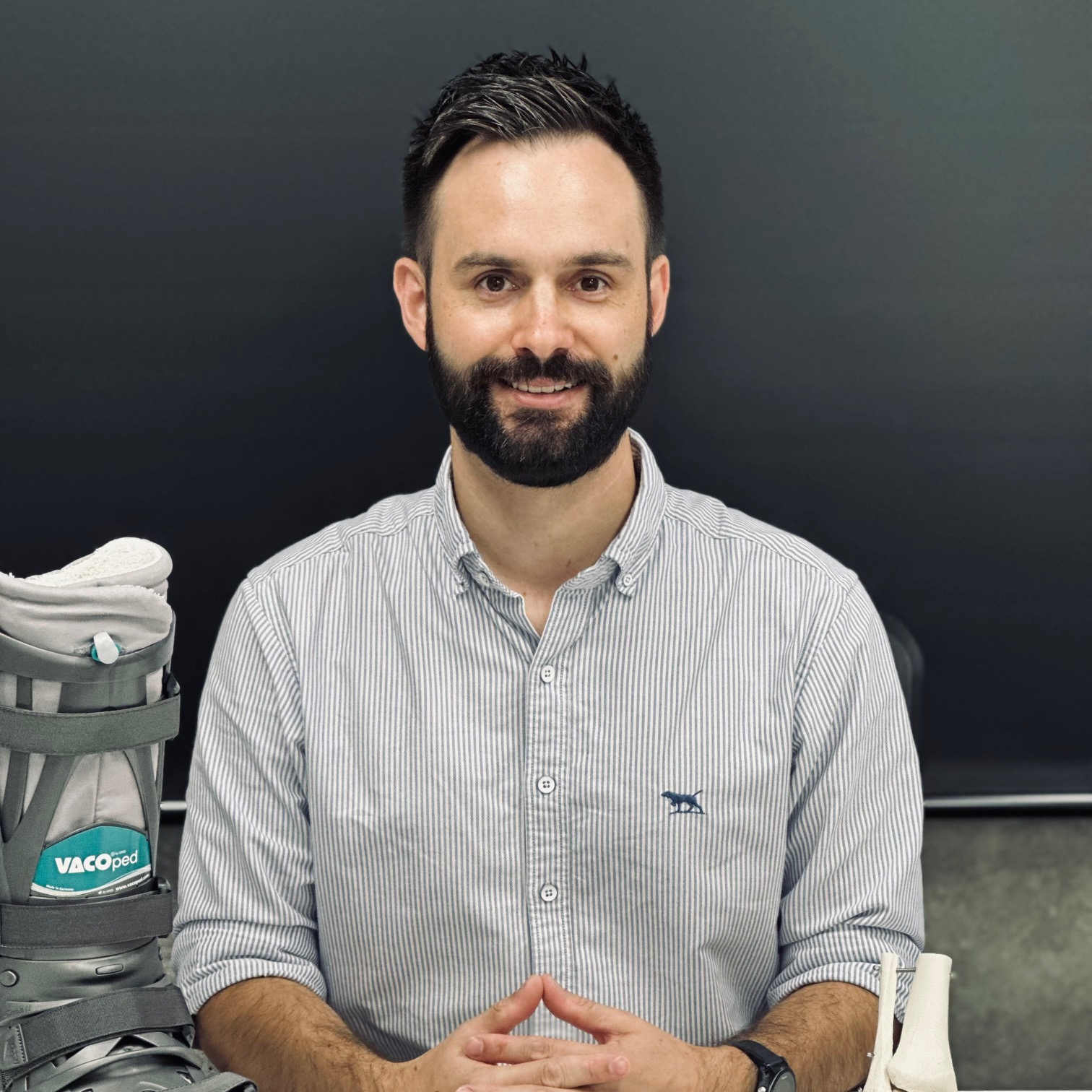
Dan Poke – Knee & Ankle Physiotherapist | Gold Coast
Dan is a knee and ankle physiotherapist on the Gold Coast with over 10 years of experience in musculoskeletal rehabilitation and post-surgical care. He also has a very big beard. Originally from Tasmania, Dan made the trip across the channel and has spent most of his career working in private clinics across Brisbane and the Gold Coast, gaining a strong reputation for his hands-on approach and results-driven care.
He currently leads our Lower Limb Specialist Clinic in partnership with the Gold Coast Foot and Ankle Clinic, where he works closely with leading orthopaedic surgeons. Dan specialises in the rehabilitation of knee injuries, ankle instability, ligament reconstruction, and post-surgical rehab following procedures such as ACL repairs, meniscus surgery, and ankle reconstructions.
Dan’s patients value his calm, approachable manner and his ability to clearly explain injury pathways and recovery timelines. He creates structured, treatment plans that help patients feel confident and supported through every stage of their rehab journey. I’m sure he will also tell you about his brand new Tesla.
In addition to his clinical expertise in knee and ankle physiotherapy, Dan is trained in a range of modalities including splinting, casting, wound care, suture removal, and dry needling. This allows him to have full knowledge of the rehab pathway from pre-surgery to post-surgery. Dan has also obtained a wealth of knowledge in general MSK and chronic conditions. His ability to manage complex cases from both surgical and conservative injuries makes him a key member of our team.
Dan is also highly trusted by local surgeons, often overseeing the care of post-operative patients with specific lower limb needs. With access to surgeon input and specialist exercise physiologist, he ensures patients receive the highest quality care across the board.
Outside the clinic, Dan enjoys hiking and spending time with his children. His easygoing nature and dedication to helping others are just part of what makes him a favourite among his patients.
If you’ve recently broken your foot, you’re probably wondering: boot or cast – which is better? At Active Therapy, our physiotherapists are trained in all types of immobilisation including casting, splinting, bracing, and moon boot fitting. In this article, we’ll explore the differences between a boot vs cast, when each is used, and how we decide what’s best for your recovery.
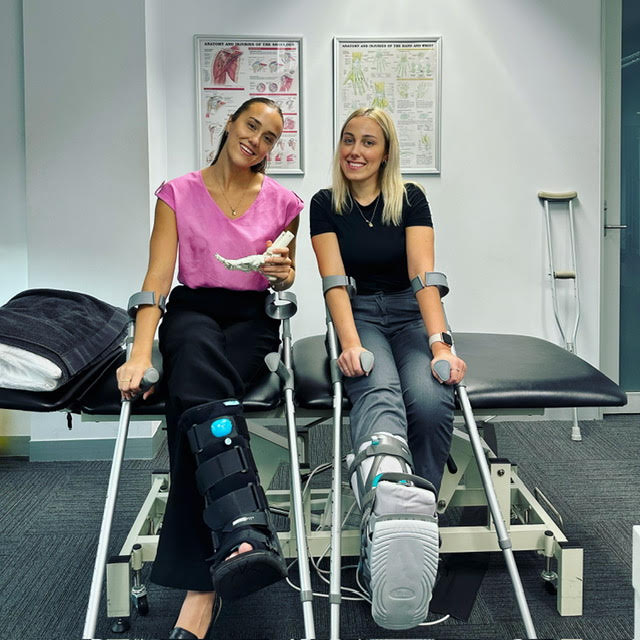
Also, we couldn’t resist sharing this great photo of two of our therapists reviewing our latest moon boots!
What is a Cast?
Plaster casts, often referred to as a cast, are hard shells made of plaster or fiberglass that are wrapped around a broken bone to prevent movement while the break heals. Plaster and fiberglass are used because when it hardens, the material is extremely durable and rigid. This rigid structure immobilizes and stabilizes the broken bone so that it can properly heal.
What is a Moon Boot?
A moon boot, sometimes referred as an orthopedic boot, is a specially designed medical shoe made out of lightweight, yet sturdy material. The design allows for a lighter fit that can be easily adjusted throughout care. Some noticeable differences include the use of adjustable straps that allow for a customized fit, varying lengths in the height, and the toes are usually not covered.
Which should be used?
Lots of factors go into choosing which system is right for you. At Active Therapy, our therapists have unique skills in that we can cast, splint, brace and can provide moon boots.
If your broken bone is severe, a cast is usually applied during the first weeks of treatment. This method has the best research supporting healing as it cannot be removed by the patient. There can be some exceptions to the rule. If there are wound care concerns and a patient is under one of our therapists, a moon boot maybe considered to enable easy dressing and inspection of wounds.
Moonboots are usually better tolerated by patients as the material is lightweight allowing easier mobility and less strain on the tendons. They also allow more breathability for patients with skin concerns.
Splinting can be used for smaller breaks or for children. this can enable very exact customisation with the lightness of a splint. Like the moon boot, It can also be removed towards the end of treatment to shower or for approved exercises.
Different options can also accelerate or decelerate healing depending on the condition. In some instances casts will enable faster healing however in other cases, moon boots can allow some walking and thus pressure, enabling faster healing.
It comes down to the injury, the break, if surgery had to be performed, wound care, patient conditions and many other factors. Luckily our Active Therapy therapists do this every day and work very closely with GP’s and Surgeons to get the fastest, safest healing.
Injuries to the ankle can be a lifelong trouble if not treated well. Weak tendons can lead to further injuries and poorly healed fractures can lead to arthritis in later life.
We can experience up to 3 times our body weight in impact when we are walking! So looking after an injury and finding the right help is crucial.
Jordan, one of our lower limb specialists, says that diagnosing exactly which structure is causing the pain can be tricky but is very important in management long term. Sometimes we get pain in one area, that is actually caused from an injury at a completely different location. Obesity, poor posture or balance can also alter the body’s centre of gravity leading to a change in mechanics of the lower limb region.
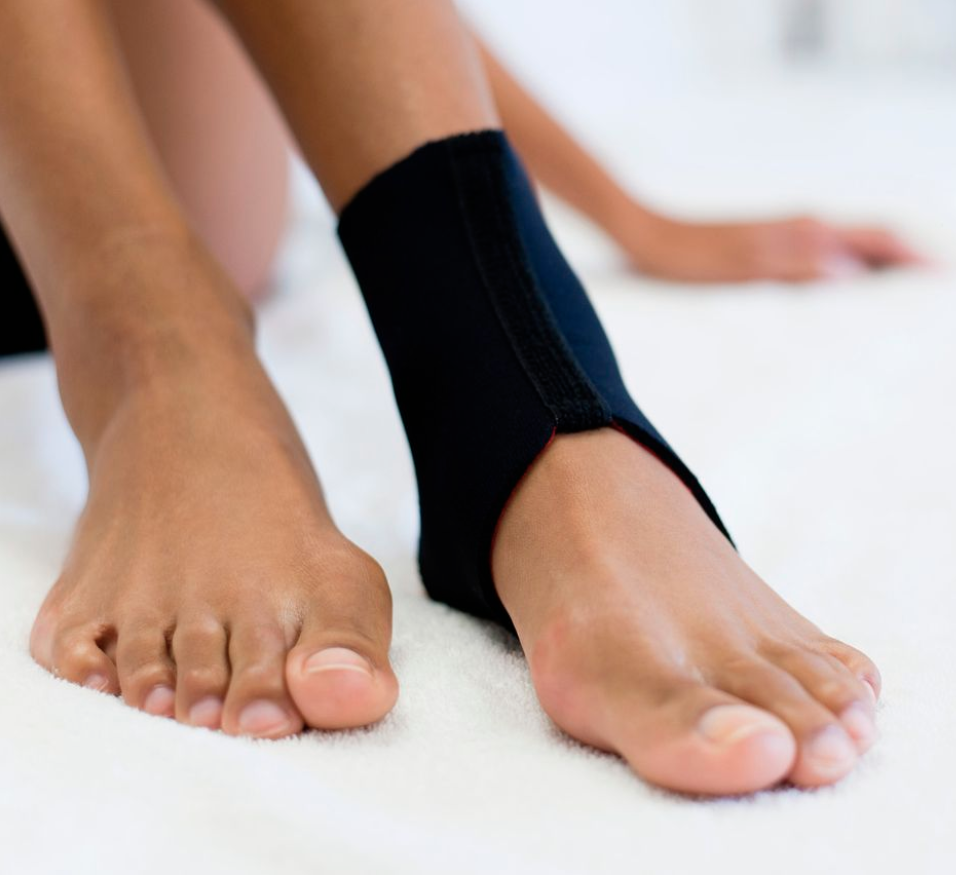
A very common injury that occurs is an ankle sprain. This is when the ligaments supporting the ankle are wrenched and stretched, usually as a result of a known fall or injury. Once a sprain has occurred it is important that the ligaments heal well so that the ankle can remain supported long term. If a significant injury is missed or proper rehabilitation doesn’t occur you may end up prone to further strains or having an unstable ankle joint.
A specialised lower limb physiotherapist is a good place to start to assess this condition.
Jordan will often assess using multiple different techniques and sometimes will require a patient to consider an X-ray or MRI if the strain is complex.
If you suspect an ankle strain, start by elevating the foot to reduce swelling and icing the area to reduce pain. If the ankle is still sore to walk on the next day, or looks considerably swollen, consider a physio appointment to assess the level of damage.
At a physiotherapy appointment, Jordan, would assess the severity, rule out a fracture and provide education moving forward. This might involve exercises, taping, soft tissue massage, joint mobilisation and return to sport time frames.
We have experienced Physiotherapists at all our clinics. Our Physios work with Orthopaedic Surgeons as leaders in their field.
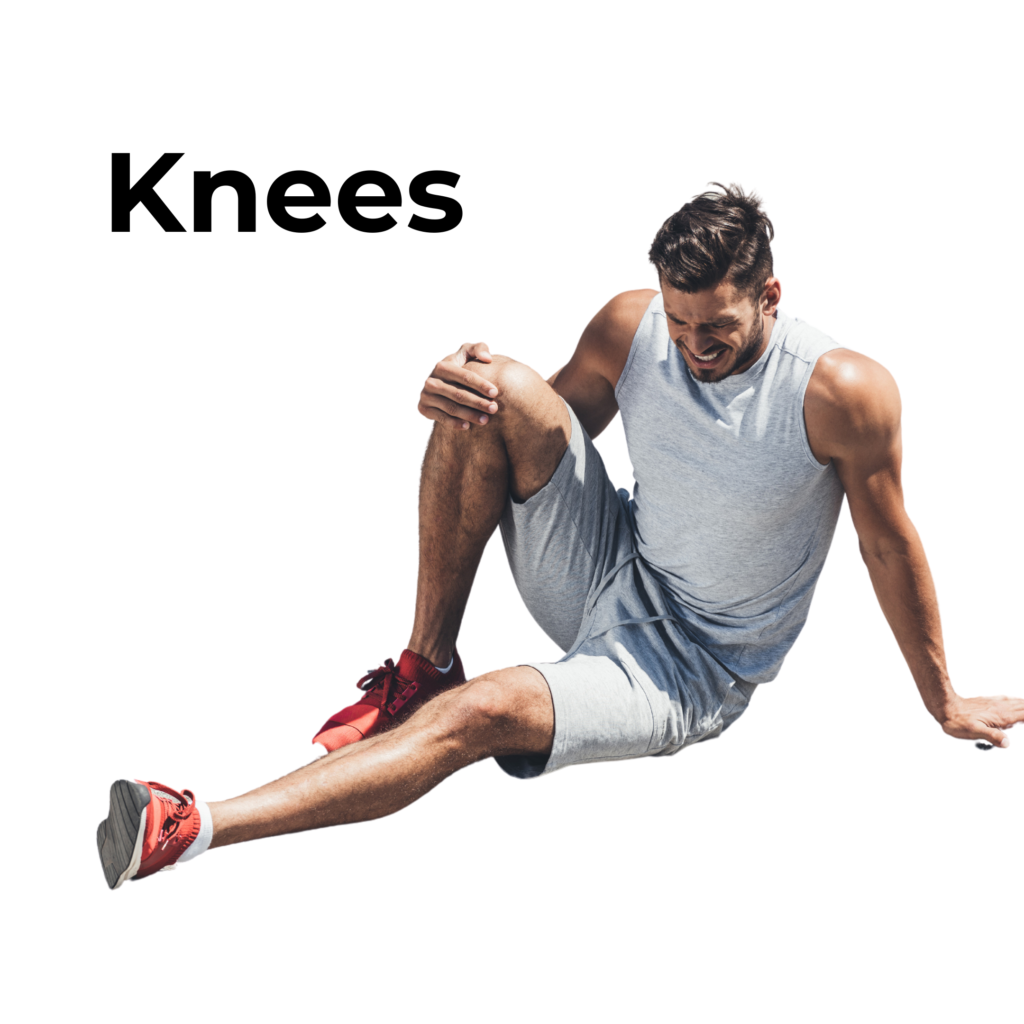
Miles, has worked with Gymnastics Tasmania and has over a decade of experience in lower limb concerns. He says that knees require specialist knowledge as the concern could be coming from the lower leg, upper leg or the knee itself.
The good news is, once diagnosed, there are many ways to enable a return to good function.
Miles will get a patient to do multiple staged tests to assess where the pain or injury is stemming from. He will sometimes organise scans to rule out other pathology. Treatment will be based on diagnosis but can include, strengthening of weakened areas, protecting the injury site, education and modification to keep you Active through the recovery phase, deep tissue trigger points, dry needling and many more modalities. Our physios can also support you through any surgery required with expertise in post-surgical care.
If you have a knee concern, come and book in to see Miles at our Southport Clinic.
We are open!! Our new Physiotherapy Clinic in Coomera is now open. We are providing all our usual Active Therapy services to our new clinic. Providing Physiotherapy and Exercise Therapy to the Coomera, Logan and Northern Gold Coast areas.
We are a specialist clinic that works with your surgeon and doctor to provide lower limb and upper limb therapy. This may include foot, ankle, knee or elbow and shoulder.
We have a limited number of patients and therapists at each clinic to minimise contact.
We have stocked up on hand sanitiser, cleaning products and we have extra deep cleans weekly.
Active Therapy can offer Telehealth appointments for anyone that has been in a Covid hot-spot or feels unwell. We ask that no patient enters the clinic if they are waiting on a Covid result, have been in a hot-spot area, has been in contact with anyone with Covid or has been unwell.
Welcome to Active Therapy news feed! Active Therapy is a Therapy clinic located on the Gold Coast. We have been providing specialised Physiotherapy and Occupational Therapy services to our clients for over 10 years. We work with Surgeons and Doctor’s to diagnose musculoskeletal concerns. Our focus is post-surgical care for our many clients.
David Coles, our director, is passionate about providing the highest level of professional service. He is a regular lecturer at universities on the Gold Coast and at multiple conferences. David also provides specialist support to the Gold Coast Suns, Gold Coast Titans, Tennis Australia and other sporting bodies. If you have any questions about services we provideor any general inquiry please contact us on (07) 5526 4066. Alternatively, email us at, admin@activetherapy.com.au.